
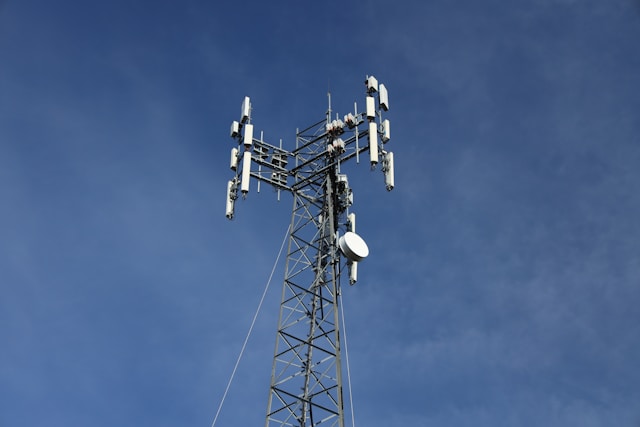
The Broadband Equity, Access, and Deployment Act allocated $42.5 billion to close connectivity gaps across the United States. It is the largest broadband infrastructure investment in US history. Every dollar comes with conditions – and the condition most likely to create procurement blind spots is Build America, Buy America. BABA provisions require domestic preference for construction materials and manufactured products in federally funded projects. For network equipment, domestic preference and import duty obligations create overlapping cost layers most deployment budgets fail to separate.
BABA compliance does not eliminate import duties
Build America, Buy America provisions require manufactured products used in BEAD-funded deployments to be produced in the United States. For telecom equipment – optical line terminals, fiber distribution hubs, network switches, power systems, enclosures – full domestic manufacturing across every component category is not realistic given current US production capacity. NTIA recognized this and established a waiver process for products where domestic supply is unavailable, insufficient, or would increase project cost by more than 25%.
Waiver-eligible equipment sourced from allied countries – Japan, Korea, European Union member states, Taiwan – satisfies BABA’s domestic preference framework through the waiver mechanism. It does not satisfy customs. Equipment imported from a waiver-approved non-US origin still clears US Customs and Border Protection, still classifies under its applicable HTS code, and still pays the MFN duty rate for its country of origin.
SEE ALSO
Rip-and-replace mandates and tariff cost: sourcing compliant telecom equipment under Section 301
Operators and ISPs planning BEAD-funded network builds face a two-layer procurement problem: first, identify equipment meeting BABA provisions or qualifying for a waiver; second, calculate the import duty cost on every non-domestic component entering the build. The first layer is a compliance exercise. The second is a cost exercise. Most BEAD applicants are running the compliance exercise and skipping the cost exercise – or assuming duty cost is negligible because the equipment is not from China.
Non-China does not mean duty-free
Section 301 tariffs at 25% on Chinese-origin telecom equipment have conditioned procurement teams to associate tariff cost with Chinese sourcing. When the replacement vendor is European or Korean, the instinct is to treat duty cost as resolved. It is not resolved – it is reduced.
MFN duty rates on telecom infrastructure equipment under HTS 8517 apply regardless of whether the origin country is an ally or an adversary. Optical networking equipment, routing and switching hardware, signal processing units, and transmission apparatus all carry base rates. Power supplies under 8504, battery backup systems under 8507, fiber optic components under various 9001 and 9013 subheadings, and cable assemblies under 8544 each carry their own rates. A BEAD-funded fiber-to-the-premises deployment touching 20 equipment categories means 20 separate duty rate lookups – and 20 budget line items most project plans collapse into a single assumption or ignore entirely.
$42.5 billion magnifies small rate errors
BEAD funding flows through state broadband offices to subgrantees – the ISPs, cooperatives, municipalities, and tribal entities executing the builds. Subgrantees submit detailed project budgets as part of the grant application process. Equipment procurement is a major budget category. If the equipment budget understates import duty cost by even 2 to 3 percentage points across the imported equipment base, the error scales with the size of the deployment.
A regional ISP deploying fiber across 50,000 locations with $15 million in imported network equipment and a 2-point duty underestimate is carrying $300,000 in unbudgeted cost. For a deployment built on grant funding with defined cost ceilings and match requirements, $300,000 is not a rounding error – it is a funding gap the subgrantee absorbs or a scope reduction affecting the communities the grant was designed to serve.
State broadband offices reviewing subgrantee budgets have limited visibility into whether equipment cost projections include accurate duty rates. The burden falls on the deploying entity to get the per-code numbers right before submitting the budget, not after the equipment clears customs.
A *telecom HTS code tariff analysis* returns the current duty rate, BABA-relevant origin data, and Section 301 status for any 10-digit HTS classification in the network infrastructure stack. For BEAD subgrantees building procurement budgets, per-code tariff data is the difference between a budget holding through deployment and a funding gap appearing mid-build.