
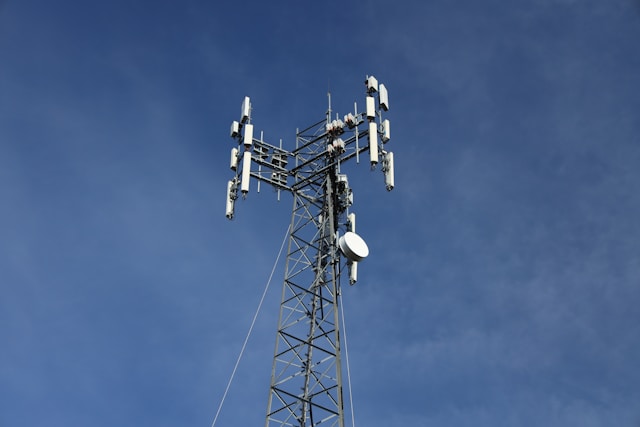
Huawei and ZTE equipment – along with other manufacturers on the FCC’s Covered Equipment List – entered the US under HTS heading 8517, which covers telecom switching, routing, and transmission equipment. Subheading 8517.62 specifically captures machines for the reception, conversion, and transmission of voice, images, or other data. Chinese-origin equipment under these codes faced Section 301 tariffs at 25% on top of base MFN duty rates beginning in 2018 and 2019.
Carriers replacing banned Chinese equipment typically source from European manufacturers (Ericsson, Nokia) or Korean suppliers (Samsung). The Section 301 surcharge drops away because the replacement hardware is not Chinese-origin. But the base MFN duty rate on the HTS code still applies. MFN rates on telecom equipment under 8517 are not zero. They are lower than the 25% Section 301 layer, but they represent a real cost per unit – and rip-and-replace programs involve hundreds or thousands of units across tower sites, central offices, and distribution hubs.
The math changes, but it does not go to zero. Operators who budgeted for equipment and labor without modeling the per-unit import duty on replacement hardware underestimated project cost on every site.
Banned equipment carried one rate; replacements carry another
Huawei and ZTE equipment – along with other manufacturers on the FCC’s Covered Equipment List – entered the US under HTS heading 8517, which covers telecom switching, routing, and transmission equipment. Subheading 8517.62 specifically captures machines for the reception, conversion, and transmission of voice, images, or other data. Chinese-origin equipment under these codes faced Section 301 tariffs at 25% on top of base MFN duty rates beginning in 2018 and 2019.
SEE ALSO
BEAD Act domestic content provisions and tariff implications for network infrastructure procurement
Carriers replacing banned Chinese equipment typically source from European manufacturers (Ericsson, Nokia) or Korean suppliers (Samsung). The Section 301 surcharge drops away because the replacement hardware is not Chinese-origin. But the base MFN duty rate on the HTS code still applies. MFN rates on telecom equipment under 8517 are not zero. They are lower than the 25% Section 301 layer, but they represent a real cost per unit – and rip-and-replace programs involve hundreds or thousands of units across tower sites, central offices, and distribution hubs.
The math changes, but it does not go to zero. Operators who budgeted for equipment and labor without modeling the per-unit import duty on replacement hardware underestimated project cost on every site.
Reimbursement program gaps
Congress established the FCC Reimbursement Program to help eligible carriers – generally those with fewer than 10 million subscribers – offset the cost of removing and replacing covered equipment. The program has disbursed billions, but it has been chronically underfunded relative to filed claims. Carriers approved for reimbursement received a fraction of requested amounts in early allocation rounds.
More relevant to tariff exposure: the reimbursement framework covers equipment purchase, installation, and disposal costs. It does not explicitly line-item import duties as a reimbursable category. A carrier importing 2,000 base station radios from a European manufacturer pays MFN duties on every unit at the port of entry. Whether those duty payments qualify for reimbursement depends on how the carrier structured its filing and how the FCC interprets equipment cost. Carriers who did not break out duty cost as a separate budget line may have absorbed it without reimbursement.
Per-code lookup is not optional at this scale
Rip-and-replace programs are not single-SKU purchases. A typical site replacement involves radio units, baseband processors, power amplifiers, antenna systems, fiber transceivers, routing equipment, and power supply infrastructure. Each component classifies under a different HTS subheading. Radio transmission apparatus may fall under 8525, antenna assemblies under 8529, fiber optic transceivers under 9013 or 8517 depending on function and construction, and power supplies under 8504.
Each subheading carries its own MFN rate. Each rate varies by country of origin. A carrier replacing equipment across 200 tower sites with eight importable components per site is managing 1,600 tariff events – not one. Applying a single blended duty assumption across the replacement BOM produces the same error we see in every other equipment category: aggregate cost looks manageable while specific line items concentrate exposure in places the budget did not account for.
The carriers executing these programs on the tightest budgets – the small and rural operators the reimbursement program was designed to help – are also the ones least likely to have in-house trade compliance resources running per-code duty analysis. They rely on vendor quotes and customs broker estimates, neither of which consistently break out duty cost by HTS code and origin.
A *telecom equipment tariff rate lookup* returns the current duty rate, Section 301 status, and country-of-origin comparison for any 10-digit HTS classification in the telecom equipment stack. For carriers mid-program, running replacement line items through the lookup identifies where duty cost concentrates before the next purchase order ships. For carriers still planning, it turns a budget assumption into a budget line.


