
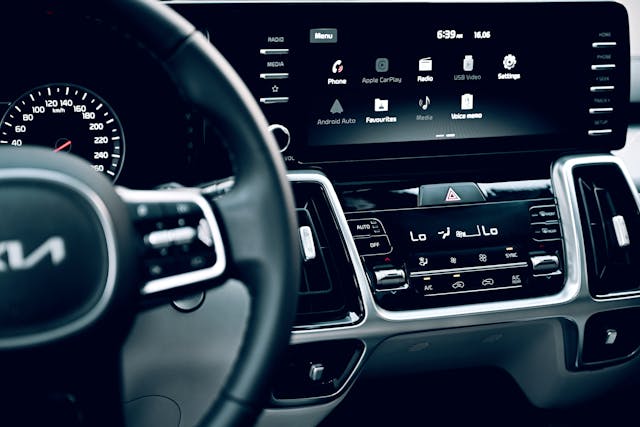
Every vehicle rolling off a North American assembly line today carries more electronic content than the one before it. ADAS sensor suites, electrified powertrain controllers, digital instrument clusters, infotainment processors – the electronics BOM for a mid-range passenger vehicle has grown from under $300 per unit a decade ago to well over $600 in many programs. What has not kept pace with the electronics expansion is procurement visibility into where those components actually originate – and what duty rates apply at each HTS classification.
Section 301 hit automotive electronics harder than most OEMs realize

Section 301 List 3 tariffs, in effect since 2018, impose a 25% duty on Chinese-origin goods across broad swaths of the electronics supply chain. The classifications read like an automotive electronics BOM: HTS 8542 covers integrated circuits – the processors, microcontrollers, and power management ICs inside every ADAS module and powertrain controller. HTS 8534 covers printed circuit boards, the substrate underneath them. HTS 8532 captures capacitors, the passive components populating every square centimeter of board space. HTS 8504 includes power supplies and DC-DC converters feeding vehicle electrical architectures. HTS 8541 covers diodes and transistors used in power switching and sensor conditioning.
SEE ALSO
USMCA rules of origin and automotive electronics: tariff implications for cross-border sourcing
A 25% tariff on finished goods from a single country would be visible and manageable. The problem in automotive is the goods are not finished when they cross the border carrying the tariff – they are components buried two or three tiers deep in the supply chain, assembled into modules by tier-one suppliers who may not even know the country of origin for every IC on the board.
Sub-tier sourcing creates hidden tariff exposure
Automotive OEMs negotiate pricing with tier-one suppliers for complete assemblies – an ADAS camera module, a body control unit, a battery management system. The tier-one sources PCBs from a board fabricator, ICs from distributors or direct from semiconductor vendors, passives from regional suppliers. Those second- and third-tier purchasing decisions determine country of origin, and country of origin determines duty exposure.
We have seen this pattern repeatedly across electronics manufacturing supply chains. A tier-one supplier assembling ADAS modules in Mexico sources multilayer PCBs from a Chinese fabricator and MLCC capacitors from a Chinese passive component manufacturer. The tier-one’s quote to the OEM includes material cost, but the 25% Section 301 duty on those Chinese-origin sub-components is either absorbed into margin – making the supplier’s position unsustainable – or passed through as a cost increase the OEM did not anticipate because the tariff exposure was invisible at the point of negotiation.
The exposure scales with electronics content. An ADAS forward-facing camera module might carry 200 to 400 discrete components. A zone controller for a software-defined vehicle architecture carries more. Each component has an HTS classification, a country of origin, and a duty rate. Without per-line-item visibility, procurement teams are estimating aggregate tariff exposure – and estimates built on pre-2018 sourcing assumptions are wrong by 25 points on every Chinese-origin line item.
Powertrain electrification multiplies the problem
Battery electric and hybrid vehicles amplify tariff exposure because electrified powertrains demand more power electronics – inverters, onboard chargers, DC-DC converters, and battery management circuits. These systems are dense with the exact HTS categories targeted by Section 301. A traction inverter alone may contain dozens of power semiconductor modules (HTS 8541), gate driver ICs (HTS 8542), current sensing resistors, and high-voltage capacitors (HTS 8532), all mounted on specialized printed circuit assemblies (HTS 8534).
As vehicle platforms shift from internal combustion to electrified architectures, the share of BOM cost exposed to Section 301 grows proportionally. Programs designed before 2018 – or designed with tariff exposure treated as a procurement footnote – carry cost structures no longer aligned with the trade policy environment they operate in.
Per-HTS-code visibility is the baseline
Automotive procurement teams managing electronics-heavy BOMs need the same tariff granularity their customs brokers use: 10-digit HTS classification, country of origin, and the applicable duty rate including any Section 301 or antidumping overlay. An *automotive electronics tariff rate lookup* returns the current duty rate for any HTS code and origin country combination, giving procurement the data to evaluate sub-tier sourcing decisions on their actual landed cost – not on pricing assumptions from before a 25-point tariff existed.
The tariff did not create a new problem. It exposed an old one – automotive electronics procurement has long operated with less component-level visibility than the complexity of the BOM demands. Section 301 just made the cost of the gap quantifiable.